6 Simple Steps to Use Mycelium Garden
The first time you lift a mycelium garden mat, the smell hits you before anything else. It is earthy, alive, and faintly sweet, like wet paper blended with mushroom spawn. When you master the steps to use mycelium garden techniques, you transform inert compost into a self-feeding ecosystem in which mycorrhizal fungi and plant roots exchange nutrients at rates conventional fertilizers cannot match. This guide translates decades of soil science into six actionable phases.
Materials
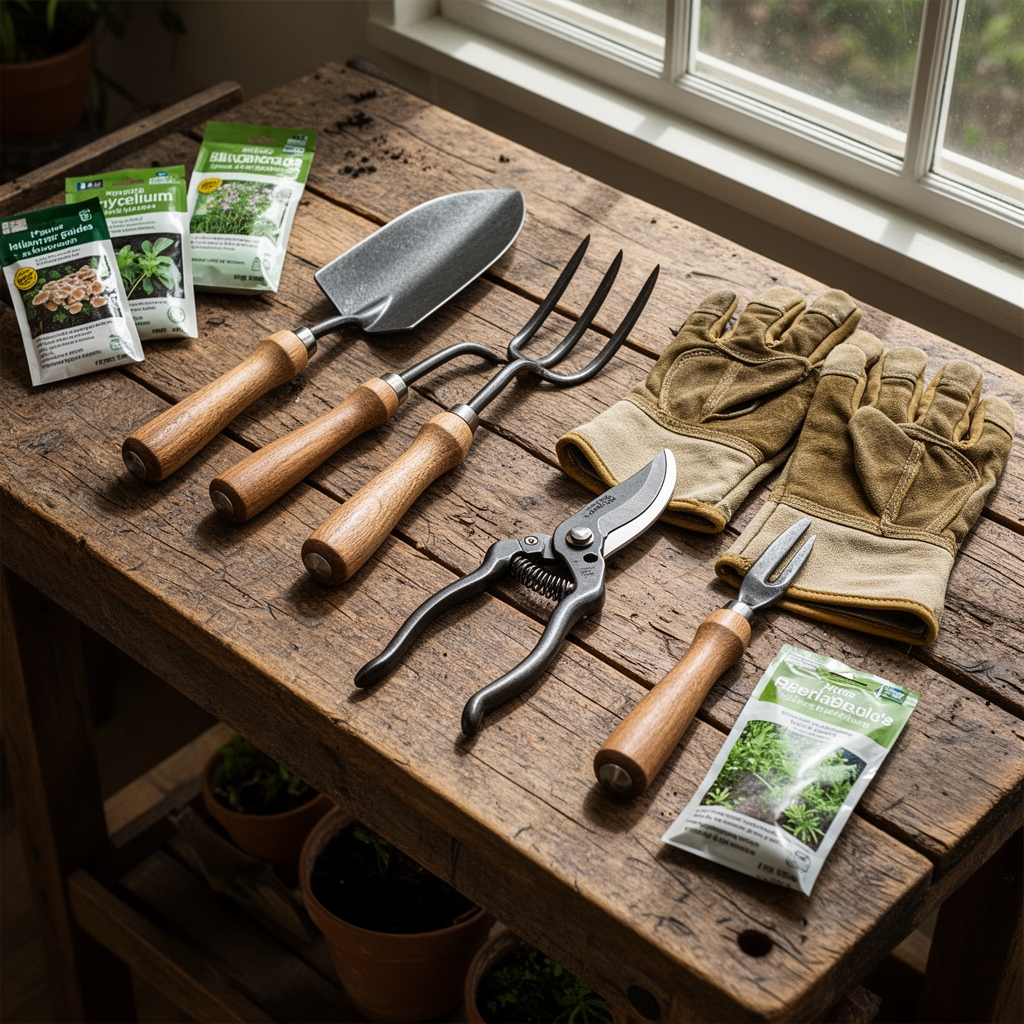
Start with a substrate that balances carbon and nitrogen at a 30:1 ratio. Shredded straw, cardboard, and hardwood sawdust serve as the carbon base. For nitrogen, add coffee grounds or alfalfa meal at 4-4-4 NPK ratios. Mycelium garden kits typically include oyster or shiitake spawn colonized on sterilized rye grain. The pH range must sit between 6.0 and 7.0 for optimal hyphal growth. Purchase a digital pH meter calibrated to two decimal places. You will also need a spray bottle, a humidity dome or perforated plastic sheet, and a tray with drainage holes. Organic cation exchange capacity improves when you mix in 10 percent by volume of aged compost or worm castings. This addition stabilizes micronutrient availability, particularly iron and manganese, which mycelium strands chelate for nearby plant roots.
Timing
Mycelium gardens thrive when soil temperatures hold steady between 55°F and 75°F. In USDA Hardiness Zones 5 through 8, initiate colonization three to four weeks after the last spring frost. Zone 9 and warmer climates allow year-round cultivation if you maintain shade cloth and consistent moisture. Outdoor beds require at least two weeks of colonization before transplanting seedlings. Indoor setups under grow lights may shorten this window to ten days, provided you hold ambient temperature at 68°F. Autumn plantings work best in Zones 7 and above, where overnight lows remain above 50°F through October.
Phases

Sowing
Layer your carbon substrate two inches deep in the tray. Mist until water just begins to pool at the bottom, then drain excess. Crumble mycelium spawn evenly across the surface at a density of one tablespoon per square foot. Cover with another one-inch layer of moist substrate. Seal the tray with a humidity dome, leaving a quarter-inch gap for gas exchange. Place the tray in a dark location with 65°F to 70°F ambient temperature. White mycelial threads should appear within 72 hours, spreading outward in a radial pattern. This phase completes when 80 percent of the substrate surface shows colonization, typically seven to ten days.
Pro-Tip: Inoculate substrate with a pinch of Trichoderma harzianum powder to suppress green mold while the mycelium establishes dominance.
Transplanting
Once colonization reaches 80 percent coverage, introduce seedlings or young plants. Dig shallow holes in the mycelium mat using a sterile spoon, spacing them six inches apart for herbs and twelve inches for fruiting vegetables. Bare-root transplants integrate faster than plug starts because roots contact hyphal networks immediately. Press soil gently around each plant, ensuring root crowns sit level with the substrate surface. Avoid compacting the mat. Mycorrhizal fungi colonize root cortex cells within 48 hours if auxin distribution remains undisturbed. Water with quarter-strength liquid kelp fertilizer (0.1-0.1-0.1 NPK) to stimulate root exudate production, which feeds the fungal network.
Pro-Tip: Prune transplant roots at a 45-degree angle before insertion. This wound response triggers lateral root branching, increasing surface area for fungal symbiosis.
Establishing
For the next two weeks, maintain substrate moisture at 60 percent saturation. Insert a moisture probe one inch deep; readings should hover between 6 and 7 on a ten-point scale. Expose the garden to twelve hours of indirect light daily. The mycelium network will thicken, forming a dense white web visible along tray edges. Leaf color deepens as nitrogen uptake accelerates through mycorrhizal pathways. Feed every seven days with compost tea diluted to 1:10 ratios. This stage ends when plants show new leaf sets and roots grip the substrate firmly enough to resist gentle tugging.
Pro-Tip: Foliar spray with a 0.1 percent solution of humic acid to enhance photosynthetic efficiency while fungi ramp up phosphorus delivery to roots.
Troubleshooting
Symptom: Green or black mold patches spreading faster than mycelium.
Solution: Remove contaminated sections with a sterile blade. Reduce moisture to 50 percent saturation and increase airflow by widening humidity dome gaps.
Symptom: Yellow leaf margins with brown necrotic spots.
Solution: Calcium deficiency. Top-dress with crushed eggshells or apply a foliar spray of calcium chloride at 200 ppm.
Symptom: Stunted plant growth despite visible mycelial colonization.
Solution: Substrate pH has drifted below 5.5. Amend with dolomitic lime at one tablespoon per square foot and retest after 48 hours.
Symptom: Mushroom fruiting bodies emerging around plant stems.
Solution: Excess humidity and low light. Increase light exposure to sixteen hours daily and maintain substrate moisture below 55 percent saturation.
Maintenance
Water every three days with half an inch of non-chlorinated water. Municipal tap water must sit uncovered for 24 hours to allow chlorine evaporation, which otherwise inhibits hyphal growth. Trim any yellowing leaves at the petiole base to prevent fungal pathogens from colonizing dead tissue. Every two weeks, side-dress with a one-quarter-inch layer of worm castings to sustain microbial diversity. Monitor substrate temperature with a compost thermometer; readings above 80°F signal anaerobic conditions and require immediate aeration with a hand fork. Rotate trays 90 degrees weekly to equalize light distribution and prevent etiolation.
FAQ
How long does a mycelium garden remain productive?
Four to six months under ideal conditions. Refresh substrate and re-inoculate when colonization drops below 50 percent coverage.
Can I use mycelium gardens indoors year-round?
Yes. Maintain 65°F to 72°F ambient temperature and provide full-spectrum LED grow lights for fourteen hours daily.
Do mycelium gardens eliminate the need for fertilizer?
No. They reduce synthetic fertilizer requirements by 60 percent but still require organic amendments for trace minerals.
Which plants benefit most from mycelial networks?
Tomatoes, peppers, basil, and lettuce show 30 to 40 percent yield increases due to enhanced phosphorus and nitrogen uptake.
Is mycelium garden substrate reusable?
Partially. Compost spent substrate for 90 days before reintroducing it at 25 percent by volume with fresh material.