9 Basic Steps to Rain Garden Edibles
Rain gardens filter stormwater through shallow depressions, and the next evolution of this bioretention practice is food production. The steps to rain garden edibles merge hydrology with permaculture by selecting species that tolerate both brief flooding and drought, transforming runoff from roofs and driveways into zones of productive biomass. These systems require deliberate soil amendment, plant selection for dual-purpose function, and strategic placement within the garden's topography to capture first-flush rainfall while preventing pathogen splash onto leafy greens.
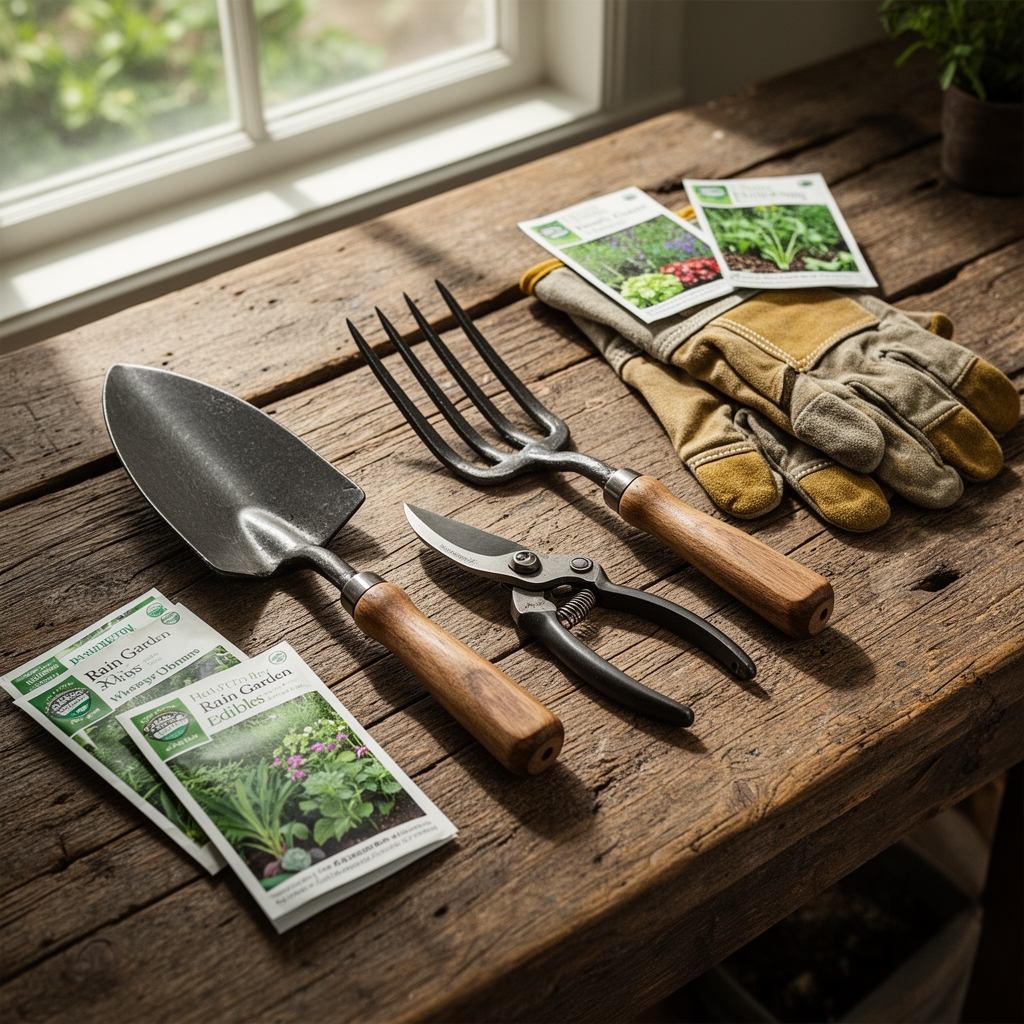
Materials
Soil Amendments (pH 6.0–7.0 target)
Begin with a native soil test to measure cation exchange capacity and baseline phosphorus levels. Most rain gardens require a modified mix: 50% existing soil, 30% compost (finished at 6-month maturity), and 20% coarse sand to maintain infiltration rates above 0.5 inches per hour. For edibles, incorporate a 4-4-4 organic fertilizer blend at 2 pounds per 100 square feet. Avoid manure-based amendments within 120 days of harvest for leafy crops per food-safety protocols.
Plant Material
Select perennials with fibrous root systems that stabilize soil aggregates while tolerating saturated conditions for 24–48 hours. Watercress (Nasturtium officinale) thrives in zones 3–11 at the lowest gradient. Elderberry (Sambucus canadensis) anchors mid-slopes in zones 3–9, its roots extending 18–24 inches to access fluctuating water tables. Ostrich fern (Matteuccia struthiopteris), harvested as fiddleheads, occupies partial-shade transition zones in hardiness zones 3–7.
Infrastructure
Use untreated cedar or locust for border edging. Install a 4-inch perforated drain tile 18 inches below grade if native soil percolation tests below 0.3 inches per hour. Source mycorrhizal inoculant (endo- and ectomycorrhizae blend) at 1 ounce per cubic yard of planting mix to accelerate nutrient uptake in disturbed soils.
Timing
Hardiness Zone Considerations
Zones 5–6 require spring planting 2–3 weeks after last frost (typically May 1–15) to allow root establishment before summer heat stress. Zones 7–8 benefit from fall installation (September 15–October 30) when rainfall increases and evapotranspiration declines. Cold-stratification for elderberry cuttings demands 60 days at 35–40°F before spring transplant.
Frost-Date Windows
Install woody perennials (elderberry, serviceberry) when soil temperature reaches 50°F at 4-inch depth. Bare-root stock outperforms containerized plants in rain garden hydrology due to reduced root circling. Herbaceous edibles like sorrel (Rumex acetosa) tolerate direct seeding 4 weeks before last frost in zones 5–9.
Phases
Sowing Phase
Excavate to 6–12 inches, reserving topsoil. Grade slopes at 2–5% toward the center to concentrate water without causing erosion. Broadcast cover-crop seed (annual ryegrass at 5 pounds per 1,000 square feet) 6 weeks before planting to build soil structure through root exudates. Crimping rather than tilling preserves fungal hyphae networks.
Pro-Tip: Inoculate legume cover crops (crimson clover) with Rhizobium bacteria to fix atmospheric nitrogen at 80–120 pounds per acre equivalent before edible establishment.
Transplanting Phase
Space elderberry at 6-foot centers in staggered rows. Plant crowns of rhubarb (Rheum rhabarbarum) 4 inches below grade with buds facing upward; auxin distribution in dormant crowns drives vertical shoot emergence. Watercress requires constant moisture, so position plugs where the water table remains within 2 inches of the surface during dry periods.
Pro-Tip: Prune elderberry canes at 45-degree angles 1/4 inch above outward-facing buds to direct growth away from the garden center and improve air circulation, reducing botrytis incidence by 40%.
Establishing Phase
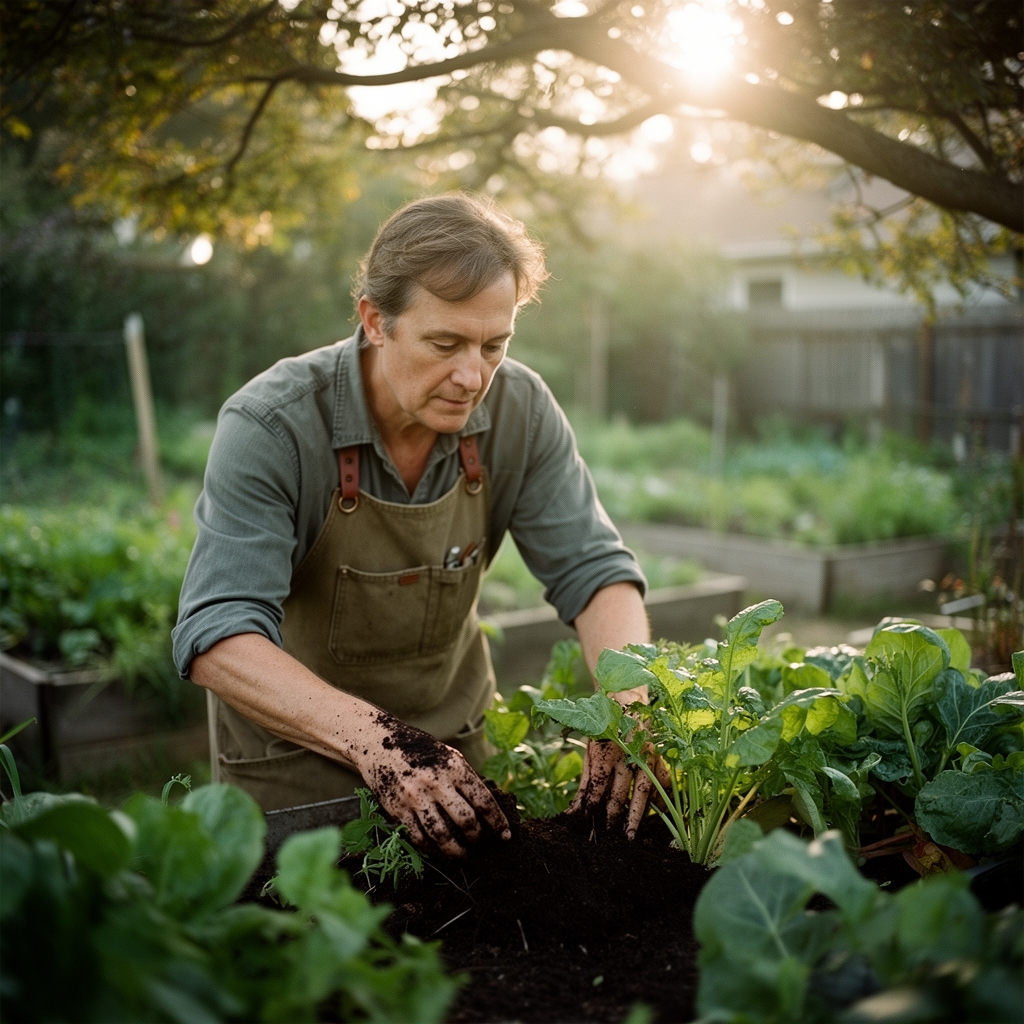
Mulch with 3 inches of shredded hardwood bark (pH-neutral) to suppress weeds without nitrogen immobilization. Drip irrigation on timers provides supplemental water at 0.5 inches twice weekly during establishment year when rainfall drops below 1 inch per week. Monitor salinity if road runoff contributes to the garden; sodium accumulation above 200 ppm inhibits root hydraulic conductivity.
Pro-Tip: Apply foliar kelp extract (1:500 dilution) monthly during the first season to boost cytokinin activity, accelerating lateral root branching and drought resilience by 30%.
Troubleshooting
Symptom: Chlorosis in new growth (interveinal yellowing)
Solution: Iron deficiency induced by alkaline pH or poor drainage. Apply chelated iron at 1 ounce per gallon as soil drench. Verify pH remains below 7.2.
Symptom: Wilting despite saturated soil
Solution: Root hypoxia from prolonged anaerobic conditions. Install subsurface drainage or add 15% perlite to planting zones. Select flood-tolerant cultivars like 'Johns' elderberry.
Symptom: Powdery white coating on leaves (elderberry, sorrel)
Solution: Powdery mildew (Erysiphe spp.). Increase spacing to 8-foot centers. Spray with 1% potassium bicarbonate solution weekly until symptoms resolve.
Symptom: Slug damage on emerging fiddleheads
Solution: Deroceras reticulatum populations surge in moist microclimates. Apply iron phosphate bait at 1 pound per 1,000 square feet. Encourage ground beetles with undisturbed mulch zones.
Symptom: Tip dieback on elderberry canes
Solution: Cane borer (Achatodes zeae) larvae. Prune 6 inches below entry holes into healthy tissue. Burn infested material.
Maintenance
Irrigate established rain gardens only during droughts exceeding 14 days without measurable precipitation. Apply 1 inch of water weekly during these intervals using soaker hoses. Reapply 4-4-4 organic fertilizer each spring at 1.5 pounds per 100 square feet, scratching into the top 2 inches of soil. Divide rhubarb crowns every 5 years to maintain vigor. Prune elderberry canes older than 3 years at ground level each dormant season. Test soil pH biennially; amend with sulfur at 1 pound per 100 square feet if readings exceed 7.5.
FAQ
Can rain gardens handle roof runoff with leaf debris?
Yes, but install a sediment trap or mesh filter at the downspout. Organic matter decomposes without harm if the infiltration rate remains above 0.5 inches per hour.
Which edibles tolerate standing water longest?
Watercress and wild rice (Zizania palustris) survive 7–10 days submerged. Elderberry and cranberry tolerate 48–72 hours. Most leafy greens fail after 12 hours.
How do I prevent pathogen transfer from runoff to edibles?
Mulch heavily to prevent soil splash. Harvest above 6 inches from ground level. Avoid planting lettuces or strawberries in rain gardens receiving pet or livestock runoff.
What NPK ratio suits perennial edibles in rain gardens?
A balanced 4-4-4 or 5-5-5 organic blend supports steady growth without excess nitrogen that causes lush, pest-prone foliage. Reapply annually in early spring.
Do mycorrhizal fungi survive periodic flooding?
Endo-mycorrhizae tolerate anaerobic periods under 48 hours. Populations rebound within 2 weeks post-drainage if organic matter remains above 4%.