6 Simple Steps to Self Sufficient Backyards
The soil between your fingers holds more protein, carbohydrates, and vitamins than any grocery store shelf ever will. A 400-square-foot backyard plot, properly amended and rotated, produces 300 pounds of vegetables annually while rebuilding topsoil. These steps to self sufficient backyards transform ornamental lawns into productive ecosystems that reduce household food costs by 40 to 60 percent within two growing seasons.
Materials
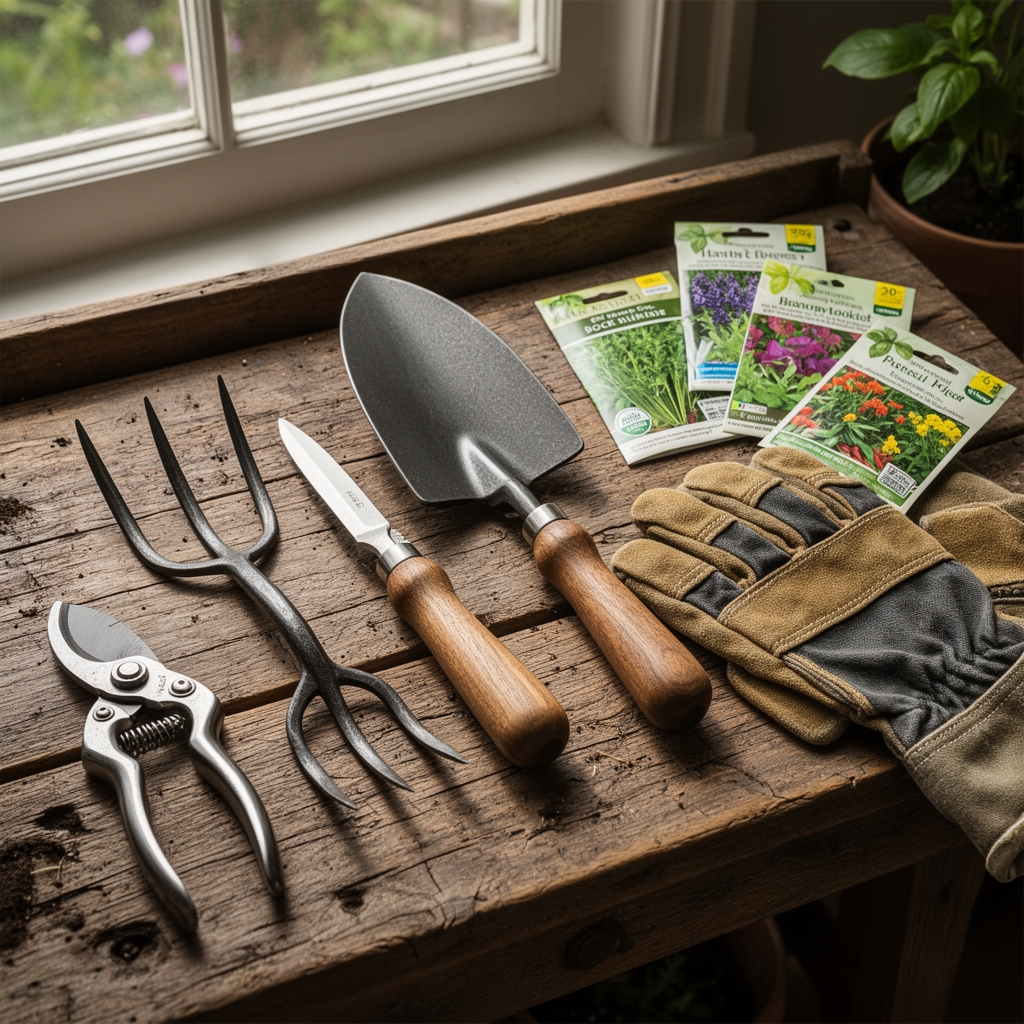
Begin with a soil test to establish baseline pH and nutrient levels. Most county extension offices process samples for $15 to $25. Target pH ranges between 6.0 and 7.0 for broadest vegetable compatibility.
Amend heavy clay or sandy soils with aged compost at a rate of 2 cubic yards per 100 square feet. Incorporate a balanced organic fertilizer rated 4-4-4 or 5-5-5 at 2 pounds per 100 square feet. This ratio supplies nitrogen for foliage, phosphorus for root development, and potassium for disease resistance without promoting excessive vegetative growth.
Acquire mycorrhizal fungi inoculant containing Glomus intraradices and Rhizophagus irregularis. These species colonize root hairs and extend nutrient uptake range by 100 to 1,000 times. Application rate: 1 teaspoon per transplant hole.
Purchase row cover fabric (0.55 ounce per square yard) for season extension and pest exclusion. Select drip irrigation tubing with 12-inch emitter spacing to deliver water at 0.6 gallons per hour per 100 feet.
Cation exchange capacity determines nutrient retention. Soils above 10 meq/100g hold amendments effectively. Below this threshold, apply biochar at 5 pounds per 100 square feet to improve retention by 15 to 30 percent.
Timing
Hardiness zones dictate planting windows. Zone 5 residents face last spring frost around May 15 and first fall frost near September 25. Zone 8 enjoys a frost-free season from March 20 through November 10.
Cool-season crops tolerate soil temperatures of 40°F. Sow spinach, peas, and lettuce 4 to 6 weeks before last frost. These species germinate when soil reaches 45°F and mature in 50 to 65 days.
Warm-season crops require soil temperatures of 60°F minimum. Transplant tomatoes, peppers, and squash 1 to 2 weeks after last frost when nighttime air temperatures stabilize above 55°F. Premature planting stunts auxin distribution and delays fruiting by 3 to 4 weeks.
Fall succession planting extends harvest. Sow carrots, beets, and brassicas 10 to 12 weeks before first fall frost. These crops tolerate light freezes and develop superior flavor as starches convert to sugars below 50°F.
Phases
Sowing
Direct-sow large seeds like beans, corn, and squash at depths equal to three times their diameter. Plant small seeds like carrots and lettuce at 1/4 inch depth. Firm soil contact initiates imbibition, the water absorption phase that activates germination enzymes.
Space rows according to mature plant width plus 6 inches. This allows airflow to reduce foliar disease pressure while maintaining sufficient leaf density to shade out competing weeds.
Pro-Tip: Coat legume seeds with Rhizobium inoculant before planting. These nitrogen-fixing bacteria colonize root nodules and contribute 60 to 80 pounds of atmospheric nitrogen per 1,000 square feet over one season.
Transplanting
Harden off seedlings over 7 to 10 days by gradually increasing outdoor exposure. This thickens cuticle wax layer and reduces transplant shock by 70 percent.
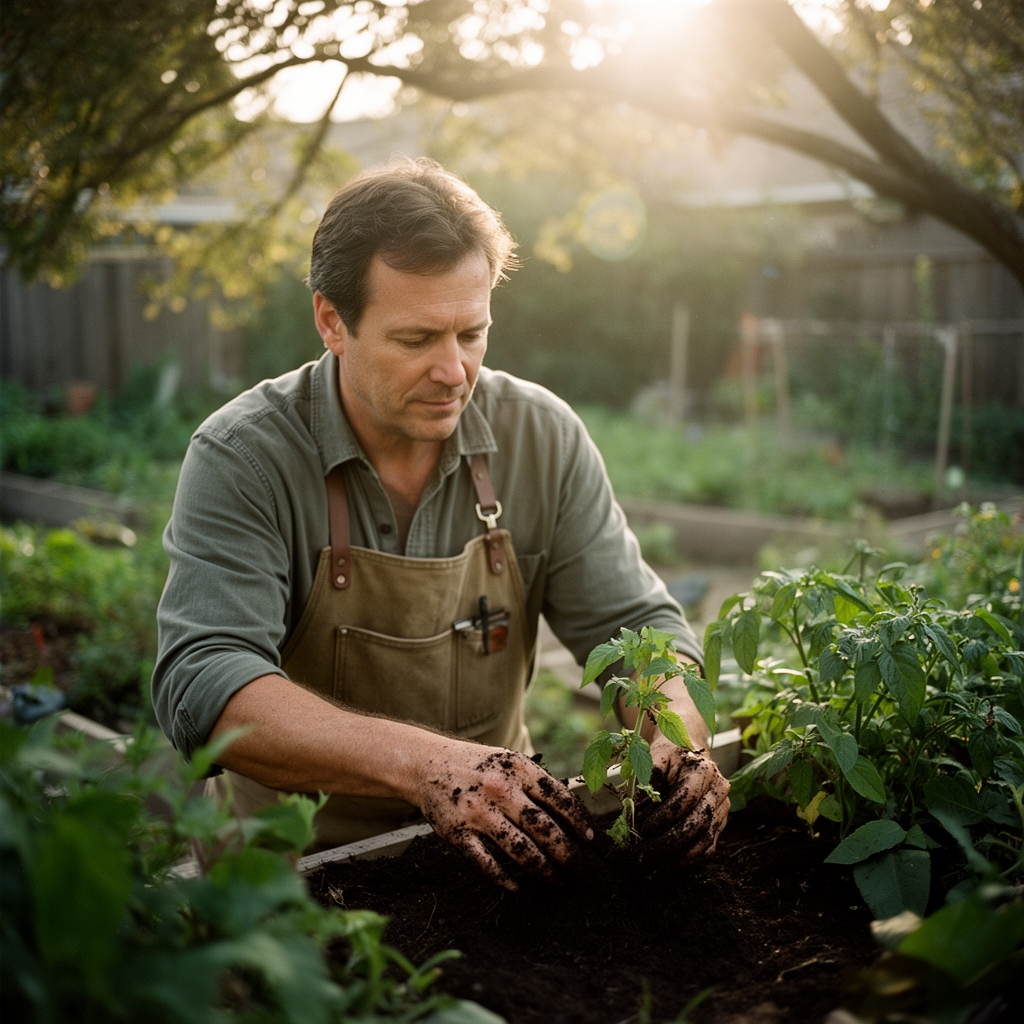
Dig holes 2 inches deeper than root ball. Place mycorrhizal inoculant in contact with roots. Backfill and water with 1 quart per plant to eliminate air pockets that desiccate root hairs.
Pro-Tip: Bury tomato stems horizontally up to first true leaves. Adventitious roots form along buried stem, doubling root mass and improving drought tolerance by 40 percent.
Establishing
Apply 2 to 3 inches of organic mulch around plants once soil warms to 65°F. Wood chips, straw, or shredded leaves suppress weeds, moderate soil temperature swings by 10 to 15 degrees, and reduce evaporation by 50 percent.
Prune indeterminate tomatoes to single leader by removing suckers at 45-degree angle when 2 to 3 inches long. This concentrates auxin flow to main stem and increases fruit size by 20 to 30 percent.
Pro-Tip: Install supports at planting time to avoid root disturbance. Drive stakes 12 inches deep and tie plants with figure-eight loops that accommodate stem expansion.
Troubleshooting
Symptom: Yellowing lower leaves with green veins. Solution: Nitrogen deficiency. Side-dress with blood meal (12-0-0) at 1/2 cup per plant or apply compost tea weekly.
Symptom: Blossom end rot on tomatoes and peppers. Solution: Calcium deficiency caused by irregular watering. Maintain consistent soil moisture and apply gypsum at 2 pounds per 100 square feet.
Symptom: Holes in leaves with slime trails. Solution: Slug damage. Place copper tape barriers around beds or apply iron phosphate bait at label rates.
Symptom: White powdery coating on leaf surfaces. Solution: Powdery mildew. Spray with 1 tablespoon baking soda plus 1 tablespoon horticultural oil per gallon water weekly.
Symptom: Stunted growth with purple leaf undersides. Solution: Phosphorus deficiency in cold soil. Wait for soil to warm above 55°F or apply liquid fish fertilizer (5-1-1) biweekly.
Maintenance
Provide 1 to 1.5 inches of water weekly through rainfall or irrigation. Water deeply twice per week rather than shallow daily applications. This encourages roots to penetrate 12 to 18 inches, improving drought resistance.
Monitor soil moisture at 4-inch depth. Soil should feel like a wrung-out sponge. Install a rain gauge to track precipitation accurately.
Side-dress heavy feeders like tomatoes, corn, and brassicas every 3 to 4 weeks with compost or balanced organic fertilizer at 1/4 cup per plant. Scatter in 6-inch band around drip line and water thoroughly.
Scout for pests twice weekly. Early detection allows manual removal or targeted biological controls before populations explode. Release lacewing larvae at 1,000 per 2,000 square feet for aphid control.
Remove spent plants immediately to prevent disease carryover. Compost only disease-free material. Dispose of blighted or mildewed plants in municipal waste.
Rotate crop families annually. Never plant tomatoes, peppers, or eggplants in locations used for these crops the previous year. This breaks disease cycles and balances nutrient demand.
FAQ
How much space does a self-sufficient garden require? A family of four needs 600 to 800 square feet for summer vegetables plus 400 square feet for storage crops like potatoes, onions, and winter squash.
When should I start composting? Immediately. A 3-foot cube bin processes 1 cubic yard of kitchen scraps and yard waste into finished compost in 3 to 6 months at carbon-to-nitrogen ratios of 25-30:1.
Can I grow food in partial shade? Leafy greens, herbs, and root crops tolerate 4 to 6 hours of direct sun. Fruiting crops require 8 to 10 hours for adequate photosynthate production.
What yields can I expect? Properly managed beds produce 0.5 to 2 pounds of vegetables per square foot annually depending on crop selection and season length.
How do I preserve excess harvest? Freeze, can, dehydrate, or ferment surplus. A chest freezer stores 300 to 500 pounds, extending garden productivity through winter months.