9 Basic Steps to Understory Berry Bushes
The cool shade beneath a mature oak canopy offers ideal conditions for productive berry cultivation. Most gardeners ignore this vertical resource, leaving valuable growing space unused. The steps to understory berry bushes transform dim woodland floors into reliable food-producing zones while mimicking natural forest ecology. Berry species adapted to partial shade deliver consistent yields without competing for sunlight with canopy trees.
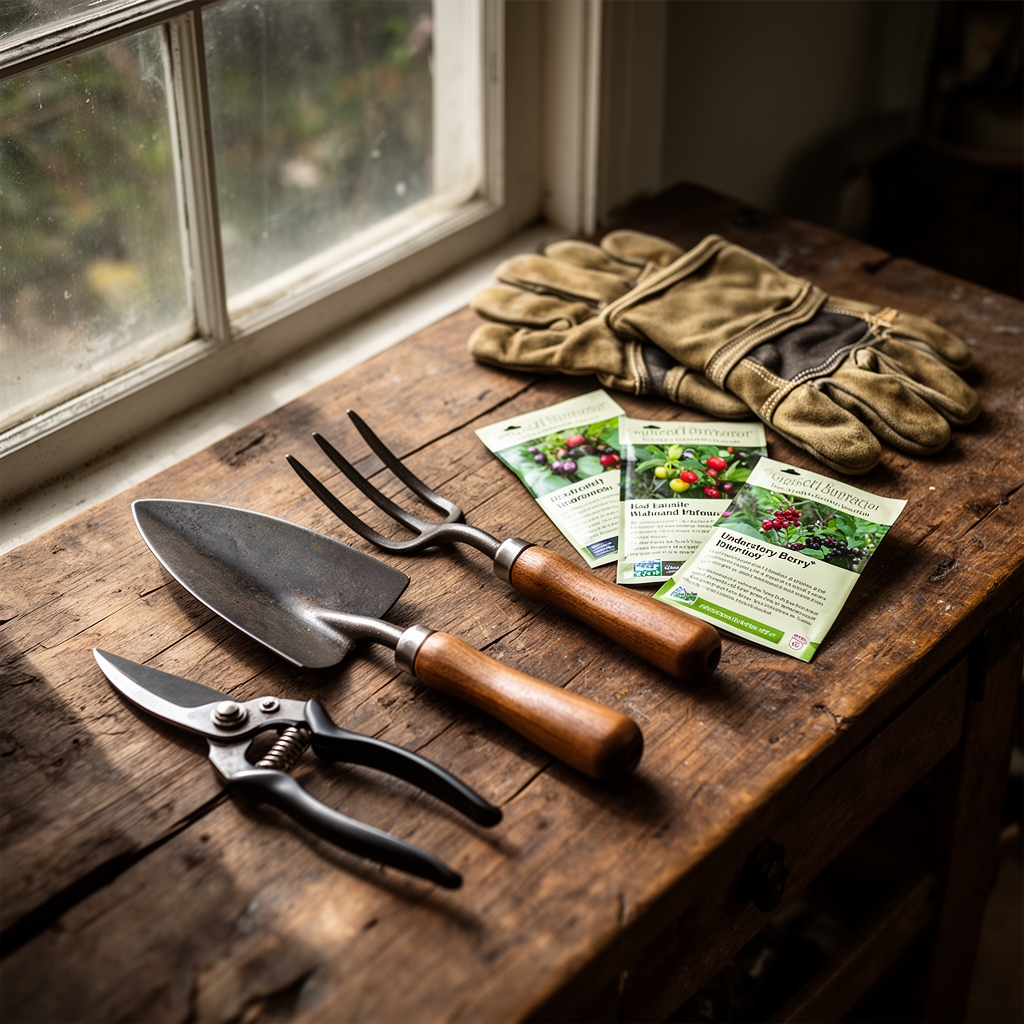
Materials
Soil amendment begins with understanding cation exchange capacity in forest environments. Existing leaf litter provides nitrogen but lacks phosphorus for fruit set. Apply composted manure at 2 cubic feet per plant or feather meal at 1/2 cup per square foot to raise nitrogen availability. Bone meal delivers phosphorus at 3-15-0 NPK in a 1/4 cup application per planting hole.
Target soil pH between 5.5 and 6.5 for most understory berry species. Sulfur amendments lower pH by approximately 0.5 units per pound applied to 10 square feet. Use a digital pH meter rather than strip tests for accuracy within 0.1 units. Organic fertilizer blends at 4-4-4 or 5-5-5 NPK ratios support steady growth without excessive vegetative flush.
Mycorrhizal inoculant contains Glomus intraradices and related species. These fungi extend effective root surface area by 100 to 1,000 times. Purchase products with minimum 120 propagules per gram. Mix 1 tablespoon directly into each planting hole at root contact depth.
Mulch materials include shredded hardwood bark, aged wood chips, or pine straw. Avoid fresh cedar or black walnut, which release allelopathic compounds. Plan for 3 inches of mulch depth in a 24-inch radius around each plant.
Timing
Hardiness zones dictate planting windows for bare-root and containerized stock. Zones 3-5 require spring planting between last frost and June 1. Zones 6-8 allow both spring installation (March 15 to May 15) and fall planting (September 15 to November 1). Zone 9 growers plant from November through February during dormancy.
Bare-root plants demand installation within 48 hours of unpacking. Soak roots in room-temperature water for 2 to 4 hours before planting. Container stock transplants successfully any time soil can be worked, but avoid periods when temperatures exceed 85°F for seven consecutive days.
Fruiting begins in year two for most cultivars, reaching full production by year four. Blueberry varieties require cross-pollination from at least two cultivars with overlapping bloom periods. Plant spacing of 4 to 6 feet allows adequate air circulation while maximizing understory coverage.
Phases
Site Preparation Phase
Clear existing vegetation in a 3-foot diameter circle per plant. Remove perennial weed roots completely, especially those of invasive species like garlic mustard or Japanese stiltgrass. Till amendments to 8-inch depth where root compaction exists. Forest soils often need no tillage if leaf litter has maintained structure.
Pro-Tip: Apply granular pre-emergent herbicide containing corn gluten meal at 20 pounds per 1,000 square feet two weeks before planting to suppress annual weed germination for 6 weeks.
Planting Phase
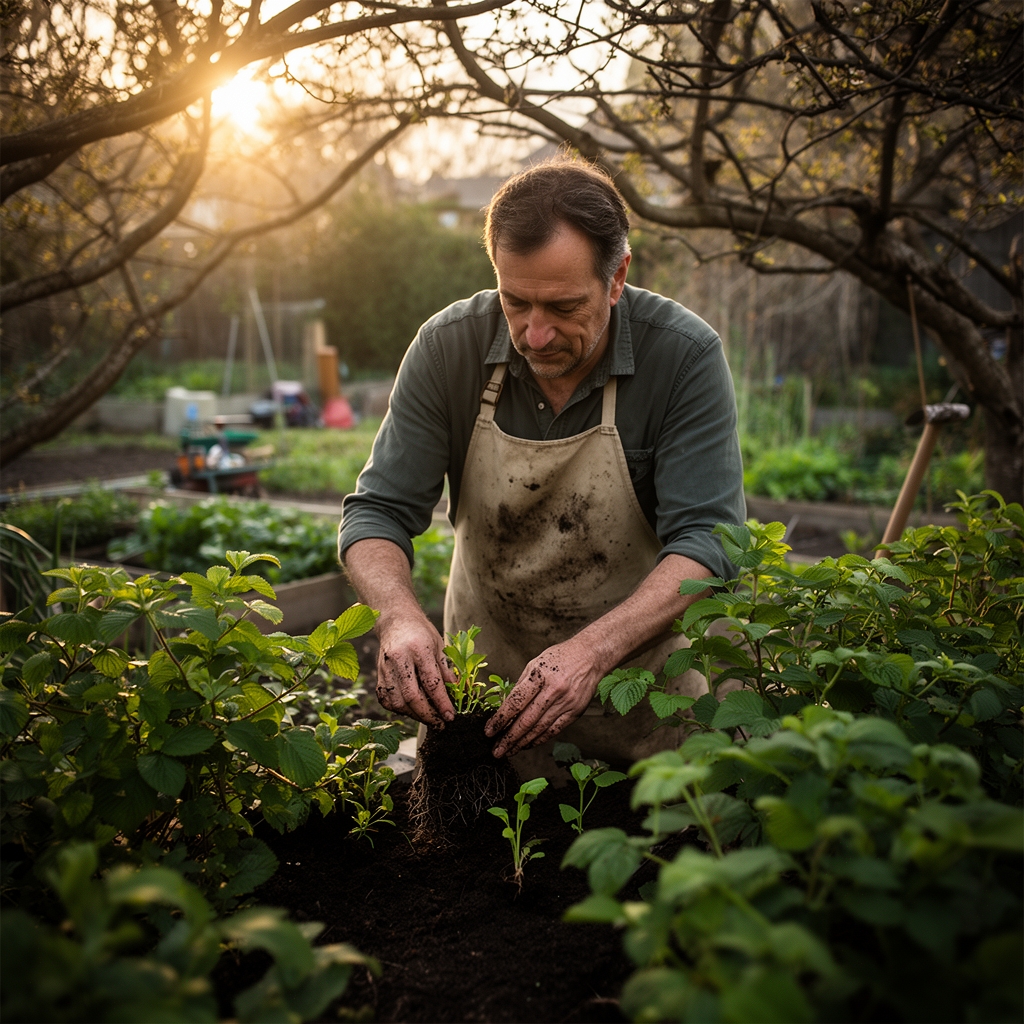
Dig holes 1.5 times root ball width and equal to root ball depth. Planting too deep interrupts auxin distribution and causes stem rot. Position the root flare at grade level. Backfill with native soil mixed 50:50 with finished compost.
Create a 4-inch soil berm around the planting hole perimeter to form a water basin. Apply 2 gallons of water immediately after planting to eliminate air pockets. Add mycorrhizal inoculant at this stage when root hairs are most receptive.
Pro-Tip: Prune container-circled roots with clean shears at 45-degree angles pointing outward to redirect growth and prevent girdling.
Establishment Phase
Water requirements reach 1 inch per week during the first growing season. Install rain gauges to track natural precipitation. Drip irrigation delivers moisture at 0.5 gallons per hour directly to root zones without wetting foliage.
Apply mulch after soil warms to 55°F in spring. Earlier application slows warming and delays root activity. Replenish mulch annually to maintain 3-inch depth as decomposition occurs.
Pro-Tip: Remove 50% of flower buds in year one to redirect energy toward root establishment rather than premature fruiting.
Troubleshooting
Symptom: Chlorosis between leaf veins while veins remain green.
Solution: Iron deficiency induced by high pH. Apply chelated iron at 1 tablespoon per gallon as foliar spray. Retest soil pH and amend with elemental sulfur.
Symptom: Premature fruit drop at pea size.
Solution: Inadequate pollination or boron deficiency. Introduce native bee habitat within 300 feet. Apply borax solution at 1 tablespoon per 12 gallons of water as soil drench once annually.
Symptom: Wilted shoots with dark lesions at base.
Solution: Phytophthora root rot from poor drainage. Remove affected canes at ground level. Improve drainage with 4-inch raised beds. Apply phosphorous acid fungicide at label rates.
Symptom: Small holes in leaves with defoliation progressing from top down.
Solution: Japanese beetle feeding. Apply beneficial nematodes (Heterorhabditis bacteriophora) to soil in September targeting grubs. Hand-pick adults into soapy water at dawn when beetles are sluggish.
Maintenance
Prune during dormancy between January and March. Remove dead, diseased, or crossing canes at ground level. Thin to maintain 6 to 8 productive canes per mature plant. Cuts should be 1/4 inch above outward-facing buds at 30-degree angles.
Fertilize annually in early April with 1/2 cup of 10-10-10 per plant broadcast in 18-inch radius. Avoid nitrogen application after July 1 to prevent late-season growth vulnerable to frost damage.
Monitor soil moisture at 4-inch depth with a probe. Established plants require supplemental water only during drought exceeding 14 days without rain. Deep watering every 10 days surpasses frequent shallow irrigation.
FAQ
How much shade can berry bushes tolerate?
Most productive cultivars thrive in 4 to 6 hours of dappled sunlight. Full shade below 2 hours reduces yields by 60% or more.
Which berry species grow best in understory conditions?
Gooseberries, currants, and shade-tolerant blueberry cultivars like 'Northland' perform reliably. Raspberries require more light and struggle under canopy.
When do understory berries produce ripe fruit?
Harvest windows span June through August depending on species and cultivar. Gooseberries ripen earliest, followed by currants, then late-season blueberries.
Can I grow berries under evergreen trees?
Acidic needle drop benefits blueberries but dense evergreen canopy blocks excessive light. Choose deciduous overstory for better results.
How do I prevent bird damage to ripening berries?
Install 3/4-inch mesh netting over bushes when fruit begins color change. Secure edges to ground level to eliminate entry points.