10 Pro Ways How to Closed Loop Garden
The smell of rich, finished compost mixing with fresh soil tells you everything is cycling back where it belongs. Learning how to closed loop garden means building a self-sustaining system where every output becomes an input, where kitchen scraps fuel next season's harvest, and where soil health compounds year after year instead of depleting. This approach eliminates waste streams, cuts external fertilizer costs to near zero, and creates a biological engine that runs on careful observation rather than purchased amendments.
Materials
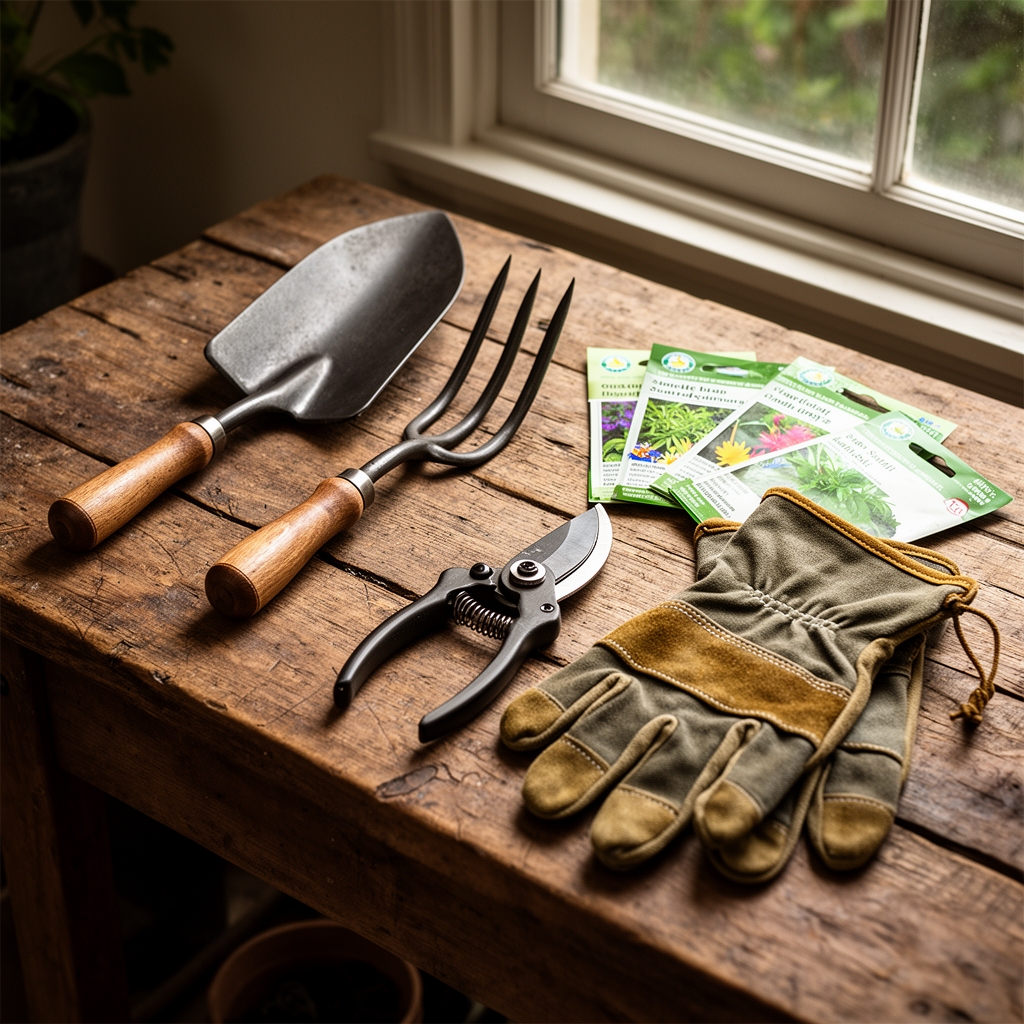
Every closed loop system requires specific inputs organized by their nutrient profiles and pH influence. Start with three-bin composting infrastructure made from untreated lumber or recycled pallets. The center bin holds active decomposition, reaching 135-160°F to sanitize pathogens and weed seeds.
For nitrogen sources (the first number in NPK ratios), collect fresh grass clippings, coffee grounds (pH 6.5), and kitchen vegetable scraps. These materials typically provide 2-1-1 ratios when fully decomposed. Aged poultry manure offers 4-4-2 once composted for six months, bringing cation exchange capacity up through organic matter accumulation.
Carbon materials balance the system. Shredded autumn leaves, cardboard (remove tape and labels), and straw provide structure while maintaining pH neutrality around 7.0. Wood chips aged for one year contribute long-term humus building without tying up nitrogen through decomposition.
Mineral amendments include crushed eggshells for calcium (pH 8.0), which also buffer acidic soils over time. Kelp meal at 1-0-2 provides trace minerals and growth hormones. Rock phosphate (0-3-0) addresses phosphorus needs in established perennial beds where mycorrhizal fungi colonization has matured.
A worm bin converts finished compost into vermicast with NPK around 5-5-3, plus beneficial bacteria populations exceeding 10^9 CFU per gram. Red wigglers (Eisenia fetida) process half their body weight daily at 60-70°F.
Timing
Closed loop garden establishment follows hardiness zone frost patterns precisely. Zones 3-5 begin indoor composting infrastructure in March, eight weeks before last frost. Start worm bins simultaneously to establish populations before summer feeding peaks.
Zones 6-8 can establish outdoor three-bin systems in late February. Soil temperatures reach 50°F for initial incorporation of fall-finished compost by mid-April. First vegetable plantings coincide with vermicast top-dressing applications.
Zones 9-11 operate year-round systems. Rotate compost bins every six weeks. Time heavy feeding crops like tomatoes and squash to follow two-month compost maturation cycles, ensuring nutrient availability matches plant demand curves.
Fall preparation begins 90 days before first frost across all zones. Direct finished compost into beds designated for spring planting. This timing allows winter freeze-thaw cycles to integrate organic matter while preventing nutrient leaching through spring runoff.
Phases
Sowing Phase
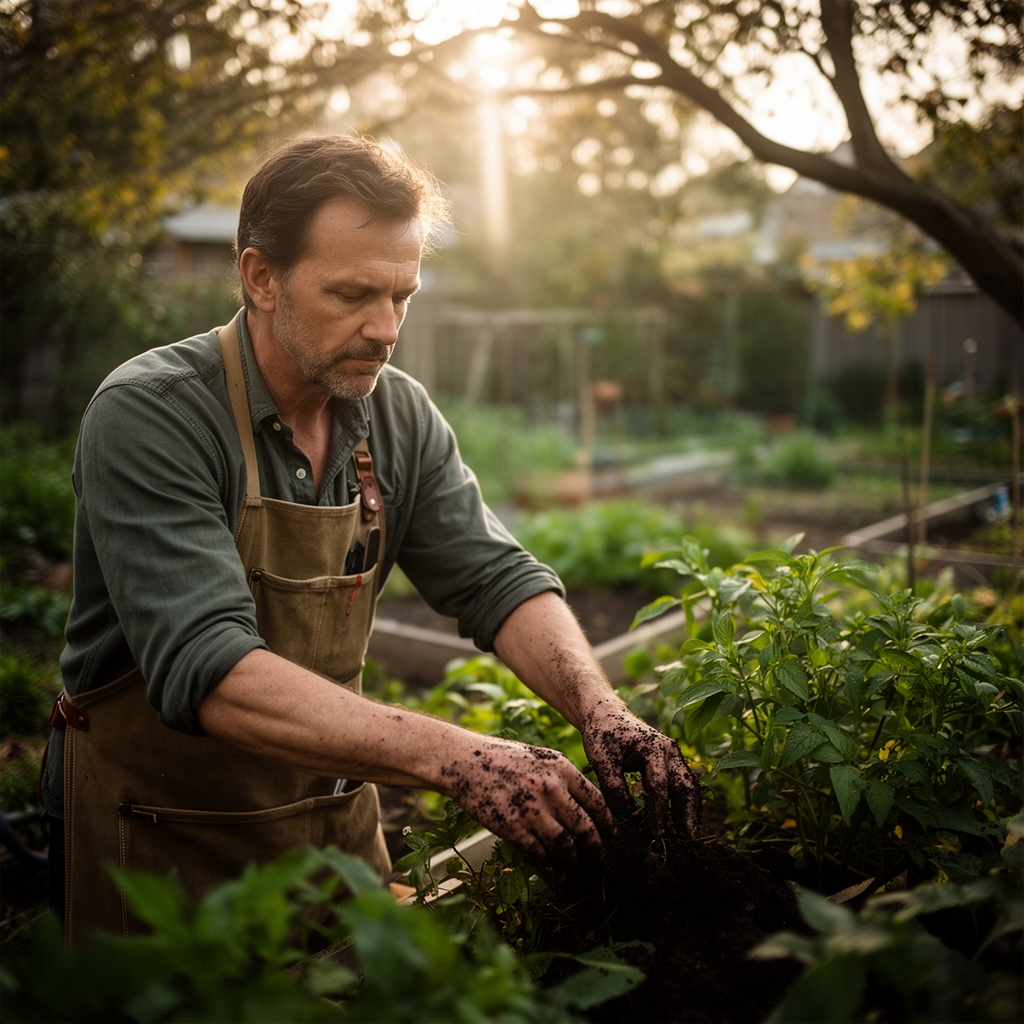
Begin with soil testing to establish baseline NPK and cation exchange capacity. Target organic matter content at 5-8% for vegetable production. Incorporate aged compost at 2 cubic feet per 10 square feet, working material to 8-inch depth.
Seed starting uses homemade potting mix: 40% finished vermicast, 40% coconut coir (pH 6.0-6.8), 20% perlite. This blend provides 3-2-1 NPK naturally while maintaining 60% water-holding capacity.
Pro-Tip: Inoculate legume seeds (peas, beans) with species-specific Rhizobium bacteria. This ensures nitrogen fixation nodules form within 14 days, converting atmospheric N2 to plant-available NH4+.
Transplanting Phase
Harden seedlings over 7-10 days, reducing water by 30% and increasing UV exposure incrementally. Transplant during overcast conditions or evening hours to minimize transplant shock and auxin distribution disruption.
Dig holes 1.5 times root ball diameter. Place 1/4 cup vermicast at hole bottom. This concentrated beneficial bacteria zone enhances root establishment within 72 hours through improved nutrient uptake and disease suppression.
Pro-Tip: Prune tomato seedlings at 45-degree angles just above soil line if leggy. This stimulates lateral root formation and reduces apical dominance, creating bushier plants with 30% more fruiting sites.
Establishing Phase
Apply 2-inch mulch layer of aged wood chips around transplants, keeping material 3 inches from stems. This moderates soil temperature swings of up to 15°F and reduces water loss by 60% compared to bare soil.
Side-dress heavy feeders with 1/2 cup vermicast monthly. Work material into top 2 inches of soil 4 inches from plant base. This mimics natural nutrient cycling patterns without salt buildup from synthetic fertilizers.
Pro-Tip: Foliar spray compost tea (diluted 1:4) every 14 days during vegetative growth. Bacterial counts of 10^8 CFU/ml colonize leaf surfaces, outcompeting fungal pathogens and providing immediately available micronutrients through stomatal absorption.
Troubleshooting
Symptom: Yellowing lower leaves with green veins (interveinal chlorosis).
Solution: Indicates iron deficiency from pH above 7.5. Apply sulfur at 1 lb per 100 square feet to lower pH 0.5 units. Foliar spray chelated iron at 1 tablespoon per gallon weekly until new growth shows uniform green.
Symptom: Compost pile temperature below 100°F with ammonia odor.
Solution: Carbon to nitrogen ratio too low (excess nitrogen). Add shredded cardboard at 2:1 ratio by volume to active material. Turn pile completely to integrate oxygen, which shifts anaerobic decomposition to aerobic process within 48 hours.
Symptom: Blossom end rot on tomatoes and peppers.
Solution: Calcium transport disruption from inconsistent watering, not calcium deficiency. Maintain soil moisture at 60-70% field capacity. Mulch thickness of 3 inches prevents moisture swings exceeding 20% between irrigations.
Symptom: Stunted growth with purple leaf undersides.
Solution: Phosphorus unavailable due to cold soil (below 55°F) or mycorrhizal fungi absence. Delay transplanting until soil warms. Inoculate transplants with endomycorrhizal fungi (Glomus species) at 1 teaspoon per root zone.
Symptom: Worm bin producing excess liquid with foul odor.
Solution: Overfeeding or inadequate bedding. Stop food additions for one week. Add shredded newspaper at 3:1 ratio to current bin contents. Drill additional 1/4-inch drainage holes if liquid accumulates faster than weekly removal.
Maintenance
Water deeply to 8-inch depth twice weekly rather than daily shallow irrigation. This encourages root growth downward and activates deeper soil microbial populations. Use soil moisture probe rather than guessing; maintain readings at 6-7 on 0-10 scale.
Harvest compost when internal temperature matches ambient air for seven consecutive days. Material should crumble easily with earthy smell and no identifiable original components. Screen through 1/2-inch hardware cloth before application.
Rotate crops using four-year cycles: legumes, leafy greens, fruiting vegetables, root crops. This prevents pathogen buildup and balances nutrient extraction patterns. Legume years add 40-80 lbs nitrogen per acre through biological fixation.
Turn active compost bins every five days during active decomposition (135°F+). This introduces oxygen necessary for thermophilic bacteria metabolism and prevents anaerobic zones from forming. Each turning accelerates finished compost production by 30%.
Test soil pH and NPK annually each November. Track organic matter percentage changes to verify system sustainability. Properly managed closed loops increase organic matter 0.5-1% yearly until reaching 8-10% equilibrium.
FAQ
How long until a closed loop garden becomes self-sustaining?
Most systems reach 80% self-sufficiency within 18-24 months. Initial establishment requires purchased compost starter, amendments, and infrastructure. By year three, internal nutrient cycling supplies 90% of plant needs through composting, cover cropping, and vermicast production.
Can closed loop methods work in containers?
Yes, with modifications. Use 15-gallon minimum containers. Establish small-scale vermicomposting in 10-gallon bins. Supplement with purchased kelp meal (1-0-2) quarterly since container volume limits complete nutrient recycling compared to in-ground systems.
What cover crops enhance closed loop systems?
Winter rye adds 100 lbs organic matter per 1000 square feet when tilled under. Crimson clover fixes 80-120 lbs nitrogen per acre. Daikon radish breaks compaction to 24-inch depth and scavenges residual nutrients, preventing leaching while adding biomass for spring incorporation.
How much space does composting infrastructure require?
Three-bin systems need 12 square feet (4×3 configuration with 3-foot-wide bins). Add 4 square feet for worm bins producing 10 lbs vermicast monthly. This infrastructure supports 400-600 square feet of intensive vegetable production annually.
Do closed loop gardens attract pests?
Properly managed systems do not. Maintain compost at 135°F+ to eliminate fly larvae. Bury kitchen scraps under 6 inches of carbon material immediately. Install 1/4-inch hardware cloth under worm bins to exclude rodents. Healthy soil biology actually suppresses root-feeding pests through predatory nematode populations.