10 Best Tropical Greenhouse Plants
The smell of damp peat moss and the heavy, humid air of a controlled environment signal the start of a productive growing season. High turgor pressure within a leaf indicates a plant at its physiological peak; the cells are rigid and the vascular system is fully pressurized. Selecting the best tropical greenhouse plants requires a focus on species that thrive in high humidity and consistent temperatures. You are managing a closed ecosystem where transpiration rates and nutrient uptake are entirely under your control.
Materials:
Success begins with the rhizosphere. Tropical species generally require a pH range of 5.5 to 6.5 to ensure micronutrient availability. The substrate must be a friable loam mixed with perlite and orchid bark to facilitate high oxygen diffusion to the roots.
- Alocasia and Colocasia: Require an NPK ratio of 20-10-20. These heavy feeders need high nitrogen to support massive leaf surface area.
- Orchids (Epiphytic): Use a 10-10-10 water-soluble fertilizer diluted to quarter strength. Substrate must be coarse fir bark with high Cation Exchange Capacity (CEC).
- Ginger and Turmeric: Thrive in a 5-10-10 ratio. High phosphorus and potassium levels are necessary for rhizome development.
- Bromeliads: Require minimal soil nutrients; focus on a 17-8-22 foliar spray applied directly to the central tank.
- Bougainvillea: Needs a 10-30-10 ratio to stimulate bract production over vegetative growth.
- Bird of Paradise: Prefers a 1:1:1 balanced organic compost mixed into a sandy loam.
- Passion Fruit Vine: Requires 10-5-20 to support the high potassium demands of fruit development.
- Hibiscus: Demands low phosphorus to avoid toxicity; use a 12-4-18 blend.
- Nepenthes (Pitcher Plants): Zero NPK in the soil. Use pure long-fiber sphagnum moss with a pH of 4.5 to 5.0.
- Philodendron: A standard 20-20-20 balanced feed maintains steady vegetative growth.
Timing:
Tropical greenhouse management ignores traditional frost dates, focusing instead on the Biological Clock of the species. Most tropicals enter a period of slowed metabolism when day lengths drop below 11 hours. In USDA Hardiness Zones 9 through 11, supplemental lighting is rarely needed; however, in Zones 5 through 8, you must provide 14 to 16 hours of light to prevent senescence.
The transition from the vegetative stage to the reproductive stage is often triggered by a drop in night temperatures or a change in the photoperiod. For example, many orchids require a 15 degree Fahrenheit drop in nocturnal temperatures for three weeks to initiate flower spikes. Monitor the greenhouse thermostat to ensure the minimum temperature never falls below 60 degrees Fahrenheit for sensitive species like Alocasia.
Phases:
Sowing and Propagation
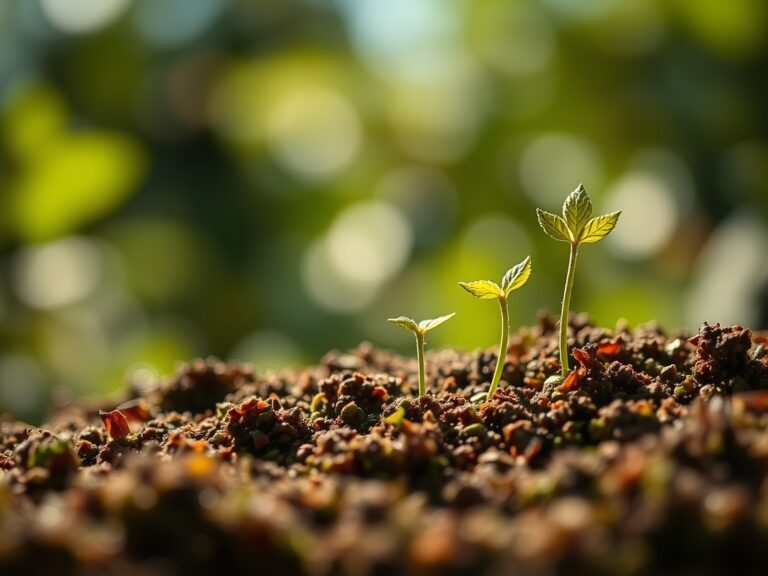
Start seeds in a sterile medium at 75 to 80 degrees Fahrenheit. Use a heat mat to maintain bottom heat, which increases the kinetic energy of enzymes within the seed coat.
Pro-Tip: Use a rooting hormone containing Indole-3-butyric acid (IBA) for cuttings. This mimics the plant's natural auxins, signaling the undifferentiated cells to form root tissue rather than foliage.
Transplanting
Move seedlings when they have developed two sets of true leaves. Ensure the new container is only two inches wider than the root ball to prevent "wet feet," where excess soil retains too much moisture and leads to anaerobic conditions.
Pro-Tip: Inoculate the roots with mycorrhizal fungi during transplanting. This symbiotic relationship extends the root system's reach, increasing the surface area for phosphorus absorption through fungal hyphae.
Establishing
During the first 21 days, maintain humidity at 80 percent. This reduces the vapor pressure deficit (VPD), preventing the plant from losing water faster than the new roots can take it up.
Pro-Tip: Avoid pruning the terminal bud during this phase. The apical dominance ensures that the plant directs its energy toward vertical growth and structural integrity before lateral branching begins.
The Clinic:
Physiological disorders in the greenhouse are usually environmental rather than pathogenic.
- Symptom: Interveinal chlorosis (yellowing between green veins) on new leaves.
- Solution: This indicates Iron deficiency. Lower the soil pH to 6.0 to increase iron solubility or apply chelated iron.
- Symptom: Leaf tip burn or necrosis.
- Solution: Often caused by Tip-burn from salt accumulation. Flush the substrate with distilled water equal to three times the pot volume to leach out excess fertilizer salts.
- Symptom: Edema (small bumps or blisters on the underside of leaves).
- Solution: The plant is taking up water faster than it can transpire. Increase horizontal airflow with fans and reduce evening watering.
- Symptom: Stunted growth with purple-tinted stems.
- Solution: Phosphorus deficiency. Apply a high-phosphate water-soluble fertilizer and ensure soil temperatures are above 65 degrees Fahrenheit for optimal uptake.
Maintenance:
Precision is the hallmark of a professional greenhouse. Use a soil moisture meter daily; do not rely on visual cues. Most tropicals require the substrate to remain consistently moist but not saturated. Aim for 1.5 inches of water per week, delivered via drip irrigation at the base of the plant to keep the foliage dry.
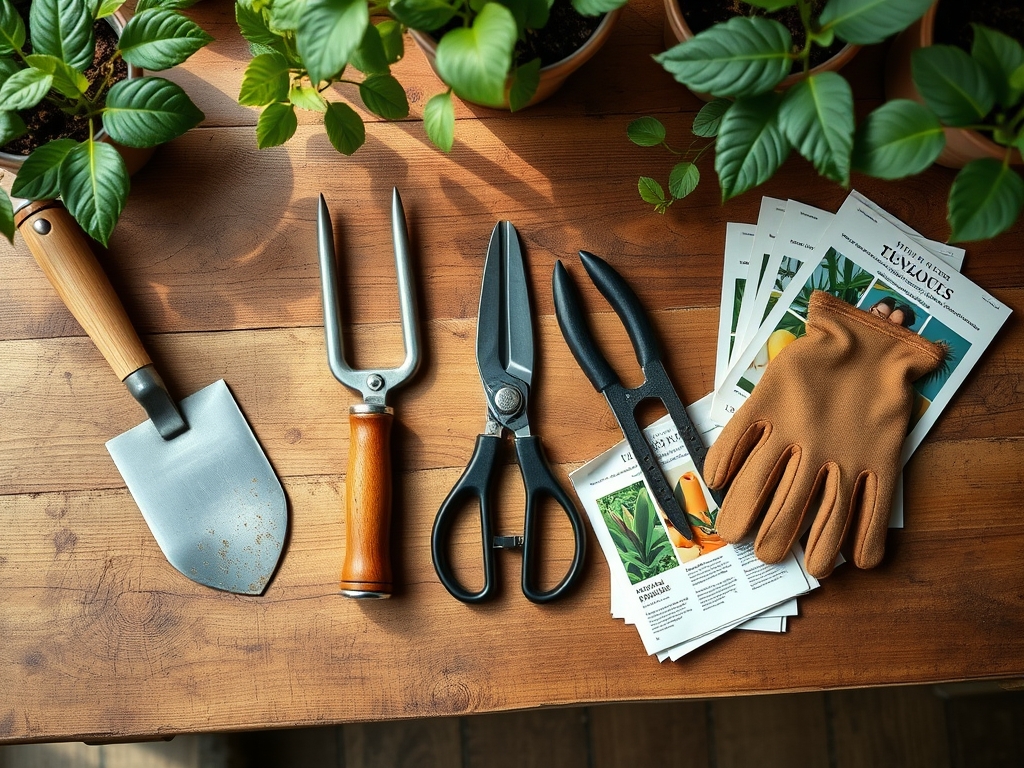
Use a hori-hori knife for weeding and dividing rhizomes; its serrated edge cuts through dense tropical root mats without tearing. For pruning, use bypass pruners to make clean, slanted cuts that allow water to run off, preventing fungal spores from settling in the wound. Sterilize tools with 70 percent isopropyl alcohol between every plant to prevent the mechanical transmission of viruses.
The Yield:
For flowering tropicals like Hibiscus or Bird of Paradise, harvest blooms just as the calyx begins to split. Use a sharp blade to cut the stem at a 45-degree angle to maximize water uptake surface area. For edible tropicals like Ginger, harvest when the foliage begins to yellow and die back, indicating that the plant has moved its energy reserves into the rhizome.
Post-harvest, submerge the cut ends of flowers in 110-degree Fahrenheit water for thirty minutes. This "hardening" process removes air bubbles from the xylem, ensuring the plant maintains turgor for several days. Store harvested rhizomes in a cool, dark environment with 60 percent humidity to prevent desiccation.
FAQ:
How do I increase humidity without causing rot?
Use horizontal airflow fans to keep air moving. This prevents stagnant pockets of moisture while maintaining high ambient humidity. Aim for a Vapor Pressure Deficit (VPD) between 0.8 and 1.2 kPa for optimal gas exchange.
What is the best way to control greenhouse heat?
Install aluminized shade cloth to reflect infrared radiation. Use automated roof vents to allow hot air to escape via the chimney effect. Evaporative cooling pads are effective in dry climates to drop temperatures by 15 degrees.
Why are my tropical plant leaves turning brown?
Low humidity is the primary cause. If the air is too dry, the plant cannot maintain turgor pressure at the leaf margins. Increase misting frequency or install an ultrasonic humidifier to keep levels above 60 percent.
Can I use tap water for all tropical plants?
No. Many tropicals, especially carnivorous plants and orchids, are sensitive to chlorine and dissolved minerals. Use a Reverse Osmosis (RO) system or collect rainwater to maintain a low Electrical Conductivity (EC) in the irrigation water.