8 Best Fertilizers for Tropicals
The smell of damp, decomposing organic matter signals a high-functioning rhizosphere. When you touch a leaf, the turgor pressure should feel rigid; a healthy tropical specimen resists the fold. Achieving this structural integrity requires more than water. It demands a sophisticated nutrient strategy. Selecting the best fertilizers for tropicals involves balancing rapid vegetative expansion with the high metabolic costs of large-scale foliage. Without precision, these heavy feeders quickly deplete the soil cation exchange capacity (CEC).
Successful tropical cultivation relies on maintaining a consistent supply of macro and micronutrients. In high-humidity environments, nutrient leaching occurs rapidly. You must compensate for this loss by selecting inputs that provide sustained release or high-affinity mineral uptake. The goal is to sustain the biological processes that drive massive leaf surface area and deep pigments. This guide provides the technical framework for selecting and applying the best fertilizers for tropicals to ensure peak physiological performance.
Materials:
Tropical plants generally thrive in a **pH range of 5.5 to 6.5**. This acidity ensures that micronutrients like iron and manganese remain bioavailable. The substrate must be a **friable loam**; a mixture that holds moisture but allows for rapid gas exchange. If the soil compresses into a hard mass, oxygen cannot reach the roots, leading to anaerobic conditions and root rot.
To optimize growth, categorize your inputs by their NPK (Nitrogen, Phosphorus, Potassium) ratios:
- High-Nitrogen Synthetic (3:1:2): Ideal for foliage-heavy plants like Monstera or Alocasia. Nitrogen drives the production of chlorophyll and amino acids.
- Organic Fish Emulsion (2:4:1): Provides a gentle boost of nitrogen and phosphorus while stimulating microbial activity in the soil.
- Slow-Release Granules (14-14-14): Coated polymers that release nutrients over 90 days based on soil temperature and moisture.
- Water-Soluble Bloom Booster (10-30-20): Used for flowering tropicals like Hibiscus or Bird of Paradise to trigger the reproductive phase.
- Chelated Iron (EDDHA or EDTA): Essential for preventing interveinal chlorosis in acidic-loving species.
- Magnesium Sulfate (Epsom Salts): Supports the central atom of the chlorophyll molecule; vital for deep greening.
- Kelp Meal: Contains cytokinins and auxins that promote cell division and root elongation.
- Bone Meal (4-12-0): A slow-acting source of phosphorus and calcium to strengthen cell walls and root systems.
Timing:
In Hardiness Zones 9 through 11, tropicals remain active year-round; however, their metabolic rate fluctuates with the photoperiod. The "Biological Clock" of a tropical plant is governed by light intensity and day length. In most regions, the primary feeding window opens when soil temperatures consistently hit 65 degrees Fahrenheit.
Stop heavy fertilization 6 weeks before the first expected frost date in marginal zones. Forcing new growth during the transition to dormancy makes the plant vulnerable to cell rupture. During the vegetative stage, focus on nitrogen-heavy inputs. As the plant shifts to the reproductive stage, reduce nitrogen and increase phosphorus to support flower development.
Phases:

Sowing and Seedling Development
When starting tropicals from seed, the initial focus is on root establishment. Use a sterile, low-nutrient medium to prevent "damping off" fungi. Once the first set of true leaves appears, apply a quarter-strength liquid fertilizer.
Pro-Tip: Seedlings exhibit phototropism, the tendency to grow toward light. Providing balanced phosphorus at this stage encourages mycorrhizal symbiosis, where beneficial fungi extend the root system's reach for better nutrient absorption.
Transplanting and Acclimation
Moving a plant from a nursery pot to the ground causes transplant shock. Use a root stimulator containing Vitamin B1 or seaweed extract. Ensure the root ball is level with the soil surface to avoid stem rot.
Pro-Tip: During transplanting, temporary auxin suppression occurs as the plant redirects energy from the terminal bud to root repair. High-potassium fertilizers help regulate osmotic pressure, allowing the plant to maintain turgor during this stressful transition.
Establishing Mature Specimens
Once established, the plant enters a high-growth phase. This is when the best fertilizers for tropicals are most critical. Apply granular slow-release products at the drip line, which is the outermost circumference of the leaf canopy where the most active feeder roots reside.
Pro-Tip: Mature tropicals utilize transpiration pull to move nutrients from the soil to the upper canopy. Maintaining consistent soil moisture is essential; if the soil dries out, the nutrient salts can concentrate and burn the root hairs.
The Clinic:
Physiological disorders often mimic disease, but they are frequently the result of nutrient imbalances or environmental stress.
- Symptom: Interveinal Chlorosis. Yellowing between the veins while the veins remain green.
Solution: This indicates an Iron or Magnesium deficiency. Apply chelated iron if the pH is above 7.0, or magnesium sulfate if the soil is acidic. - Symptom: Leaf Tip Burn. Brown, crispy edges on new or old growth.
Solution: This is often caused by salt accumulation from over-fertilizing or "luxury consumption" of sodium. Flush the soil with 3 to 5 gallons of water per square foot to leach excess salts. - Symptom: Anthocyanin Accumulation. Purplish tint on the underside of leaves or stems.
Solution: This typically signals a Phosphorus deficiency, often exacerbated by cold soil temperatures (below 55 degrees) which inhibit phosphorus uptake. - Symptom: Stunted Growth and Pale Leaves. General yellowing across the entire leaf.
Solution: Nitrogen chlorosis. Apply a high-nitrogen liquid fertilizer (e.g., 24-8-16) for an immediate metabolic boost.
Maintenance:
Precision maintenance prevents the "boom and bust" cycle of tropical growth. Use a soil moisture meter to ensure the substrate remains at a "4" or "5" on a 10-point scale. Most tropicals require 1.5 inches of water per week delivered at the drip line.
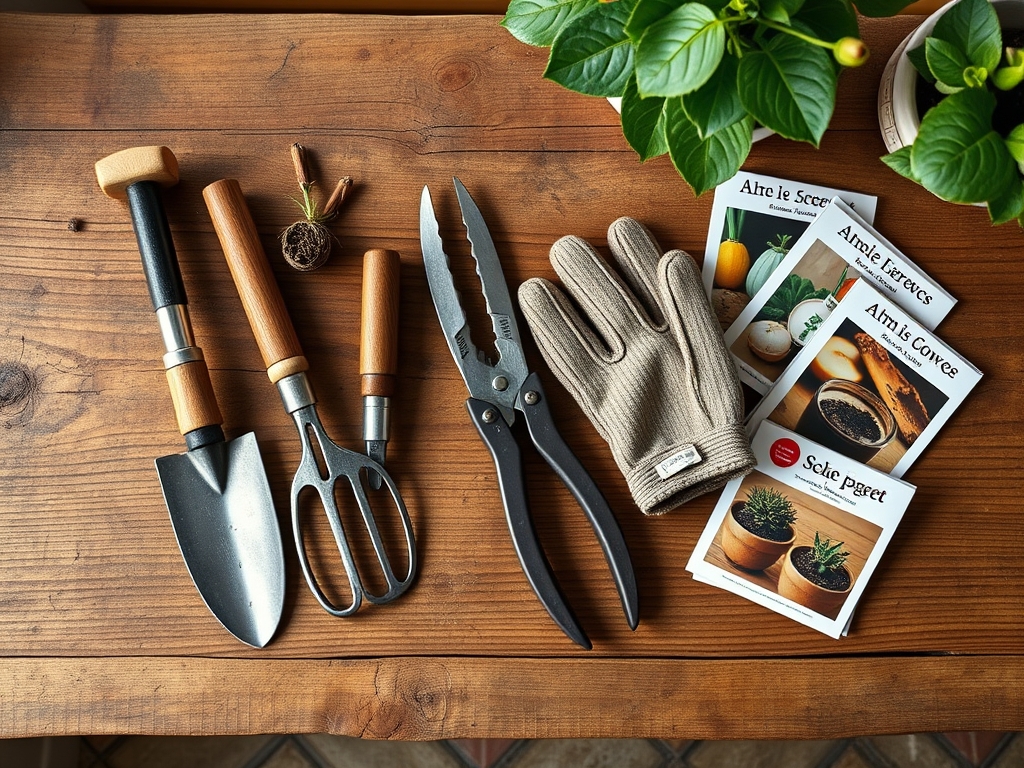
Keep a hori-hori knife sharp for removing invasive weeds that compete for nutrients. Use bypass pruners to remove senescent (dying) leaves; this prevents the plant from wasting energy on failing tissues and improves airflow. Sterilize your tools with 70 percent isopropyl alcohol between plants to prevent the spread of pathogens. Monitor the mulch layer; maintaining a 2 to 3 inch layer of organic arborist chips helps stabilize soil temperature and slowly adds organic matter back into the rhizosphere.
The Yield:
For flowering tropicals like Ginger or Hibiscus, harvest blooms in the early morning when turgor pressure is highest. Use a sharp blade to make a 45-degree cut, which increases the surface area for water uptake.
To maintain "day-one" freshness, immediately plunge the stems into room temperature water (approx. 70 degrees). For edible tropicals like Bananas or Papayas, harvest when the fruit shows a 10 to 20 percent color break. Post-harvest, these plants require a "recovery feed" of high-potassium fertilizer to replenish the sugars and starches depleted during fruit production.
FAQ:
How often should I fertilize tropical plants?
During the active growing season, apply liquid fertilizers every 14 to 21 days. If using slow-release granules, apply once every 90 days. Always water the soil before and after application to prevent root desiccation.
What is the best NPK ratio for Monstera?
A balanced 3:1:2 or 20-20-20 ratio works best. Monstera require high nitrogen for leaf size and potassium for stem strength. Avoid high-phosphorus "bloom" fertilizers unless you are specifically trying to induce flowering in mature specimens.
Can I use coffee grounds on my tropicals?
Coffee grounds are a source of organic matter but should be composted first. Raw grounds can become hydrophobic and block water penetration. They provide a small amount of nitrogen and help maintain a slightly acidic pH.
Why are my tropical plant leaves turning yellow?
Yellowing, or chlorosis, is usually caused by nitrogen deficiency or overwatering. Check the soil moisture with a probe. If the soil is dry, apply a nitrogen-rich fertilizer. If wet, improve drainage to prevent root senescence.
What does chelated mean in fertilizer?
Chelated minerals are coated in a molecule that prevents them from reacting with other soil elements. This ensures the nutrient, typically iron or zinc, remains available for plant uptake even in suboptimal soil pH conditions.